Daily Check-In App vs Regular Phone Calls: Which One Actually Keeps Seniors Safer?

Calling an aging parent every day is one of the simplest ways to stay connected. You can hear their voice, ask how they are feeling, and enjoy a meaningful conversation.
But a phone call has one limitation: it only works when someone makes the call and the senior answers.
A Daily Check-In App provides a different type of reassurance. Instead of depending entirely on conversations, seniors can actively confirm that they are okay while caregivers receive updates that help them recognize when something may require attention.
So, should families replace daily calls with technology? Not necessarily. The better question is which approach provides the right kind of support for senior safety.
Overall best daily check-in App for Seniors
Our app offers the most reliable, real-time safety net for your family, so you can stop worrying and start connecting.
Phone Calls Are Valuable, but They Depend on Timing
Regular calls remain important because they provide something technology cannot replace: human connection.
A conversation can help family members understand a parent’s mood, hear concerns, and maintain relationships. For many seniors, these calls are also an important source of companionship.
The challenge is reliability.
A parent may not hear the phone, may be away from it, or may simply be busy when you call. Families can then be left wondering whether an unanswered call means something is wrong.
Phone calls are therefore excellent for communication and emotional connection, but they are not a structured safety system.
A Daily Check-In App Creates a Predictable Routine
A Daily Check-In App approaches the situation differently.
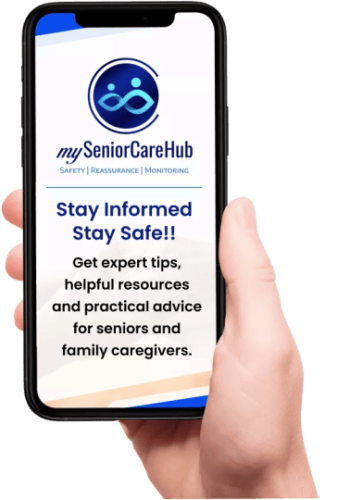
Instead of waiting for a caregiver to call, the senior completes a simple wellness check-in as part of their daily routine. mySeniorCareHub, for example, offers a Daily Check-In feature designed to let caregivers know that their loved one is safe and doing well.
A senior might check in every morning after breakfast. When the expected confirmation arrives, the family receives reassurance.
If it does not arrive, the missed check-in creates a clear reason to follow up.
Importantly, a missed check-in does not automatically mean there is an emergency. It simply makes a change in the normal routine easier to notice.
Which Option Provides Better Safety Awareness?
Consider what happens when an older adult lives alone.
With phone calls, a family member has to remember to call at the appropriate time. If there is no answer, they may try again later. Depending on the family’s routine, several hours could pass before someone decides additional follow-up is necessary.
A senior check-in app establishes an expected action instead.
This makes daily safety less dependent on whether both people happen to be available at the same time.
mySeniorCareHub also connects Daily Check-In with broader senior-support capabilities, including emergency SOS, medication reminders, location support, wellness monitoring, and family notifications.
That broader functionality is something an ordinary phone conversation cannot provide automatically.
Daily Check-In App vs Phone Calls: Which Is Better?
The answer depends on what you are trying to achieve.
Regular phone calls are better for:
- Personal conversations
- Emotional connection
- Hearing how a parent sounds
- Reducing social isolation
- Maintaining family relationships
A Daily Check-In App is better for:
- Creating predictable wellness routines
- Identifying missed check-ins
- Providing automated caregiver updates
- Supporting long-distance caregiving
- Connecting safety tools in one place
The strongest approach may therefore be using both.
Technology can handle routine reassurance while phone calls remain focused on genuine human connection.
Why mySeniorCareHub Adds More Than a Daily “I’m Okay”
mySeniorCareHub is designed specifically around seniors and caregivers rather than functioning as a simple messaging tool.
Its connected safety experience includes Daily Check-In, SOS alerts, medication reminders, wellness monitoring, family notifications, and location support.
That means families can use the Daily Check-In feature as one part of a broader approach to supporting an older loved one living independently.
The platform reports 100K downloads across app stores, hundreds of reviews from senior caregivers and families, and a 4.2-star Google Play rating, adding established user adoption to its senior-focused feature set.
Don’t Replace the Call. Give It a Better Purpose.
A Daily Check-In App and a regular phone call should not have to compete.
Phone calls provide emotional connection. Daily check-ins provide structured reassurance.
When technology handles the routine question of whether a loved one has checked in, families can spend less time calling solely to ask, “Are you okay?” and more time having conversations that actually strengthen their relationship.
For seniors living independently and caregivers supporting them from near or far, combining personal communication with a structured daily check-in can create a more practical balance between independence, connection, and everyday safety.
Frequently Asked Questions (FAQs)
-
A Daily Check-In App provides more structured reassurance through scheduled check-ins and caregiver updates. Phone calls remain better for personal conversation and emotional connection, so using both can provide a balanced approach.
-
The senior completes a simple daily action, such as tapping “I’m Okay.” Caregivers receive the update, while a missed check-in gives them a reason to follow up.
-
A missed check-in can alert or prompt caregivers to follow up according to the app and family’s established safety routine. It does not automatically mean an emergency has occurred.
-
It should not replace meaningful conversations. Instead, it can handle routine wellness confirmations so phone calls can focus more on connection, companionship, and family communication.
-
Yes. A senior check-in app can help long-distance caregivers receive regular wellness updates without requiring the senior and caregiver to be available for a phone call at the same time.