How to Keep Distant Family Members Involved in an Aging Parent’s Daily Care

Caring for an aging parent often becomes a shared family responsibility, but not every family member lives nearby. One sibling may handle appointments, another may live several states away, and someone else may only be available during emergencies. Without a clear way to share updates, the person living closest can quickly become the default caregiver.
A family sharing app can make long-distance caregiving more coordinated. Instead of relying entirely on phone calls and group messages, families can use connected safety tools to stay informed, divide responsibilities, and support an aging parent’s independence.
KEEP THE WHOLE FAMILY CONNECTED TO THEIR CARE
Bring distant family members together with a Family Sharing App that makes it easier to share updates, coordinate care, and stay connected to an aging parent.
Why Long-Distance Family Care Can Become Difficult
Distance does not necessarily mean family members want to be less involved. Often, they simply lack access to the same information as the person providing care locally.
Questions can quickly build up. Did Mom complete her usual morning routine? Has Dad returned home? Did anyone check on the missed medication reminder? Who will follow up today?
When updates are scattered across calls and messages, important information can be overlooked. Creating a shared system helps everyone understand what is happening without repeatedly contacting the aging parent.
Use a Family Sharing App to Keep Everyone Connected
A family sharing app can create one connected space where approved family members participate in an aging parent’s daily safety routine.
Depending on the app, caregivers may be able to access location information, receive safety notifications, follow daily check-ins, and coordinate responses when something unusual happens.
This is particularly useful for families living in different cities. Everyone does not need to be physically present to contribute.
The goal should not be constant monitoring. Instead, technology should provide useful information that helps family members know when attention may actually be needed.
Share Location Information When It Matters
Location sharing can provide reassurance when an aging parent regularly goes for walks, visits friends, attends appointments, or runs errands independently.
Rather than repeatedly asking, “Are you home yet?” approved family members can view available location information when necessary.
Some apps also provide location history and geofencing. A family can establish virtual boundaries around important places, such as home. Depending on the service, caregivers can receive notifications when the connected device enters or leaves those areas.
Families should discuss location sharing openly and establish clear privacy expectations before enabling these features.
Make Daily Check-Ins a Shared Routine
Daily check-ins can be particularly valuable for distant caregivers.
A parent can complete a simple “I’m Okay” check-in as part of their normal routine. Connected caregivers can then know that the check-in was completed without needing another scheduled safety call.
If an expected check-in is missed, a family member can follow up.
Families can also divide responsibilities. One sibling might review morning check-ins while another handles evening follow-ups. This creates shared involvement instead of placing every daily task on the nearest caregiver.
Create a Plan for SOS and Safety Alerts
Receiving an alert is useful only when everyone knows what to do next.
Before choosing an app, determine which family members can receive SOS alerts, who should respond first, and who can contact someone locally if necessary.
If three caregivers receive the same notification but each assumes someone else is responding, technology has not solved the communication problem.
A simple family response plan makes safety features more useful and helps distant relatives participate confidently.
What Should You Look for Before Choosing an App?
A family sharing solution for senior care should offer more than basic messaging.
Consider whether it includes:
- Real-time location sharing
- Geofencing notifications
- Daily wellness check-ins
- SOS safety alerts
- Location history
- Multiple caregiver connections
- Simple senior-friendly navigation
- Clear privacy and sharing controls
Also consider how easily family members can use the platform. Complicated technology may create additional work instead of reducing it.
The right solution should fit your parent’s lifestyle while making coordination easier for everyone involved.
How mySeniorCareHub Helps Families Share Care
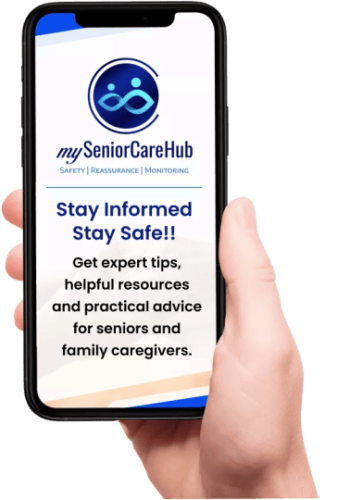
mySeniorCareHub family safety app brings several everyday senior safety tools into one connected platform.
Families can use real-time location sharing, geofencing, location history, Daily Check-In, SOS alerts, and caregiver connectivity to stay involved even when they live in different cities.
This approach helps transform caregiving from one person’s responsibility into a more connected family effort. Distant relatives can remain informed while the aging parent continues enjoying greater independence.
With a 4.7-star user rating, industry recognition, 2,000+ families worldwide, and 24/7 U.S.-based support, mySeniorCareHub also provides added confidence for families comparing senior-focused solutions.
Make Distance Less of a Barrier to Care
Living far away does not mean a family member cannot play a meaningful role in an aging parent’s daily care.
A family sharing app can help families share information, coordinate responsibilities, receive important alerts, and reduce unnecessary check-up calls.
Before buying, focus on your family’s actual needs. Decide who needs access, which alerts matter, how responsibilities will be divided, and how your parent’s privacy will be respected.
The best technology does not replace family involvement. It makes that involvement easier to coordinate, even when the people who care most are miles apart.
SHARE THE CARE, EVEN WHEN FAMILY LIVES FAR AWAY
Frequently Asked Questions (FAQs)
-
Families can divide responsibilities such as daily check-ins, appointments, medication follow-ups, and emergency responses. A family sharing app can keep everyone working from the same information instead of relying on scattered calls and group messages.
-
Long-distance caregivers can coordinate appointments, manage information, communicate with local caregivers, create emergency plans, and use shared digital tools to stay involved from another city or state.
-
Look for an app that supports the needs your family actually has, such as multiple caregiver access, daily check-ins, location sharing, safety alerts, task coordination, and privacy controls. Ease of use for the aging parent should also be a priority.
-
Yes. Some family caregiving and safety apps allow several approved relatives or caregivers to join a private care circle, share information, receive updates, and coordinate responsibilities from different locations.
-
Use consent-based technology and agree beforehand on what information will be shared. Features such as optional location sharing, daily check-ins, and relevant safety alerts can provide reassurance without requiring constant surveillance.