

What Does Healthy Aging Really Mean? A Guide for Seniors & Families
Why “Adding Life to Years” is the New Longevity? Aging is inevitable, but how we age is largely within our control. The World Health Organization (WHO) defines healthy aging as the process of maintaining the functional ability that enables well-being in older age.
Essentially, it’s not just about lifespan; it’s about healthspan. While genetics accounts for roughly 30% of how we age, research indicates that 70% of aging is influenced by lifestyle choices.
Small, intentional shifts today can lead to a more independent, vibrant tomorrow.
Four Pillars of Healthy Aging
To achieve “quality longevity,” focus on these four science-backed areas.
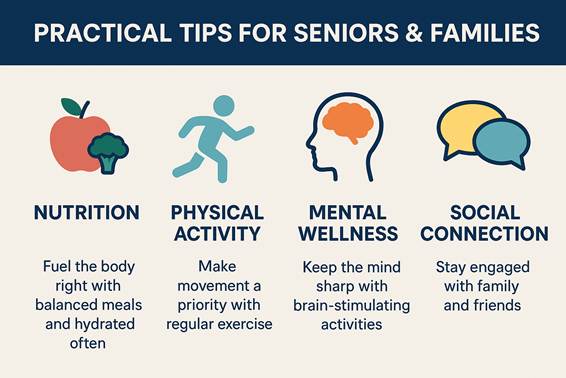
1. Nutrition: Fueling Cognitive & Physical Health
As metabolism slows, the body requires higher nutrient density with fewer calories.
- Gold Standard: The Mediterranean Diet is widely recognized for reducing the risk of heart disease and cognitive decline.
- What to Prioritize: Leafy greens, lean proteins, omega-3 fatty acids (fatty fish), and consistent hydration.
- What to Avoid: High-sodium snacks and hidden sugars that trigger inflammation.
Pro Tip: Use mySeniorCareHub app’s meal planner to track micronutrients and set hydration alerts essential for seniors who may lose their thirst sensation.
2. Physical Activity: Movement as Medicine
Regular movement is the ultimate “anti-aging” tool for bone density and fall prevention.
- WHO Guidelines: Aim for 150 minutes of moderate-intensity activity per week.
- Low-Impact Options: Walking, water aerobics, Tai Chi, or chair yoga.
- Benefit: Beyond physical health, exercise releases endorphins that act as a natural antidepressant.
3. Mental Wellness: Strengthening Cognitive Reserve
A sharp mind requires “cross-training” just like a muscle.
- Neuroplasticity: Engaging in new hobbies like learning a language or a musical instrument builds new neural pathways.
- Stress Management: Quality sleep and mindfulness meditation are proven to lower cortisol, which protects the brain’s memory centers.
- Data: Mentally active seniors show a 30% lower risk of cognitive decline.
4. Social Connection: Secret to Longevity
Loneliness is more than a feeling; it is a clinical risk factor. The Harvard Study of Adult Development (an 80-year study) found that strong relationships are the #1 predictor of happiness and long life.
- Stay Involved: Volunteer, join a local “Silver Sneakers” group, or use video calls to bridge the gap with long-distance family.
- Community Tools: Features like mySeniorCareHub’s Community Connect help bridge the digital divide, making social engagement trackable and easy.
At a Glance: Healthy Aging Tips for Senior Caregivers & Families
| Pillars | Daily Actions To Take | Proven Scientific Benefits |
| Nutrition | High-fiber, lean protein, 8+ glasses of water | Lowers risk of chronic inflammation. |
| Activity | 20-30 min walk or light stretching | Improves balance; reduces fall risk. |
| Mental | Puzzles, reading, or learning a new skill | Increases cognitive resilience. |
| Social | One meaningful interaction (call or visit) | Single biggest predictor of longevity. |
⠀⠀Cancel Anytime • No Long Contracts
How Families Can Support the Aging Process
Healthy aging shouldn’t be a solo mission. Caregivers and family members can provide the “scaffolding” for success by:
- Setting Collective Goals: Use mySeniorCareHub app to share a wellness dashboard.
- Celebrating Small Wins: Acknowledging a completed fitness streak or a week of healthy eating boosts morale.
- Automating Reminders: Use tech to manage medications and appointments so that family time stays focused on connection, not chores.
Optimize Your Golden Years
Aging gracefully isn’t about fighting the clock; it’s about living well within it. By focusing on consistency over perfection, you can maintain independence and joy.
Special Offer For Your Aging Parent’s: Gift Of 24/7 Protection
Secure Your Parents Safety
No long-term contracts. Set up in minutes. Cancel anytime.