Why Families Are Switching from Google Maps to a Dedicated Family Locator App

Google Maps is convenient for directions, finding places, and sharing a location with someone. But for families supporting aging parents, knowing where a loved one is may be only one part of the safety picture.
You may also want to know whether Mom arrived home, whether Dad left a familiar area, or whether a parent can quickly alert the family when help is needed.
This is where a dedicated family locator app offers a different experience. Rather than treating location as a navigation feature, it can connect GPS information with safety alerts, geofencing, location history, and caregiver tools.
If you are considering whether a specialized location tracking app is worth choosing over Google Maps, the decision should come down to what your family actually needs.
GO BEYOND JUST SEEING THEIR LOCATION
Choose a family locator app that combines real-time location sharing with safety alerts, geofencing, and caregiver connectivity.
Google Maps Is Useful, but It Was Not Designed Around Senior Care
Google Maps can provide real-time location sharing between people who choose to share their location. For meeting someone, coordinating travel, or occasionally checking where a family member is, this may be enough.
But basic location sharing primarily answers one question:
Where is my loved one?
Families caring for aging parents often need additional context.
Is Mom still out because she stopped somewhere, or has something interrupted her normal routine? Has Dad returned home? If a parent needs help, can they actively send a safety alert?
A dedicated senior safety solution is designed to address more of these situations than a general navigation tool.
A Family Locator App Provides More Context Around Location
A map pin tells you where someone is currently located. A dedicated family locator app can provide additional information that helps families understand that location.
For example, location history can help caregivers review recent movement when a parent is not where expected.
This can be especially useful for adult children supporting an independently active parent from another city or state.
Instead of using location information simply for navigation, families can use it as part of a broader caregiving routine.
Geofencing Can Reduce Repeated Check-Up Calls
One reason families consider switching to a dedicated location tracking app is geofencing.
Geofencing allows designated areas to be created around relevant locations. Depending on the platform, caregivers can receive notifications when their loved one enters or leaves those areas.
Imagine your mother regularly visits a community center. Rather than calling to ask whether she arrived home afterward, a relevant notification can provide reassurance without interrupting her day.
This gives seniors more space to follow their normal routines while keeping caregivers appropriately informed.
SOS Alerts Turn Location Into a Safety Tool
There is an important difference between knowing where someone is and knowing that they need assistance.
A dedicated safety app may include an SOS feature that gives seniors a simple way to send an alert to connected caregivers.
Location information can then provide useful context about where assistance may be needed.
When comparing apps, do not look only for an SOS button. Ask what happens after it is activated. Who receives the notification? Is location information included? Can multiple caregivers stay informed?
A clear response process makes an emergency feature much more useful.
Daily Check-Ins Go Beyond What GPS Can Tell You
Even accurate GPS information cannot answer every caregiving question.
A map may show that Dad is at home, but it cannot necessarily tell you whether he has started his normal day or actively confirmed that everything is okay.
A daily wellness check-in provides a different type of reassurance.
A senior can complete a simple “I’m Okay” check-in as part of their routine. If the expected confirmation does not occur, caregivers have a clear reason to follow up.
This can be particularly valuable for seniors living alone and families who want reassurance without continuously checking location.
Family Connectivity Can Make Shared Caregiving Easier
Caring for an aging parent often involves several people.
One sibling may live nearby, another may manage appointments from another city, and other relatives may help when needed.
A dedicated family sharing app can make it easier for authorized caregivers to access relevant safety information instead of relying entirely on phone calls, texts, and one person relaying updates.
Privacy remains important. Older adults should understand who can access their location and how the information will be used.
The goal should be supporting independence, not creating unnecessary surveillance.
Google Maps vs a Dedicated Family Locator App: Which Is Better?
Neither option is automatically right for every family.
Google Maps may be sufficient when you primarily need navigation and occasional location sharing.
A dedicated solution becomes more valuable when you want location information connected with features such as geofencing, location history, SOS alerts, daily check-ins, and multiple caregiver connections.
Before paying for a service, identify which features your family would genuinely use. The best solution is the one that solves your actual caregiving needs without adding unnecessary complexity.
Why Families May Consider mySeniorCareHub
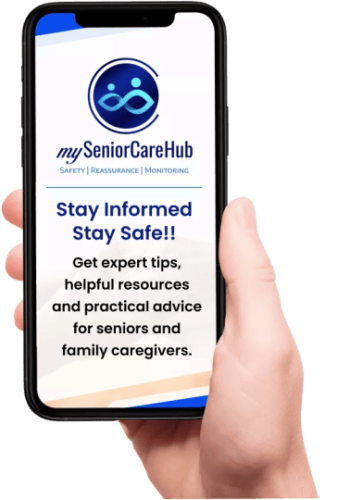
The mySeniorCareHub location tracking app is designed around older adults and family caregivers rather than general navigation.
It brings together real-time location sharing, geofencing, location history, SOS alerts, Daily Check-In, and caregiver connectivity within a broader senior safety platform. Families can therefore use location as part of a connected care routine instead of relying on a map alone.
Families also trust mySeniorCareHub for its senior-focused approach to safety and connected care. With a 4.7-star user rating, industry recognition, 2,000+ families worldwide, and 24/7 U.S.-based support, it provides added confidence for families considering a dedicated senior safety solution.
For families comparing Google Maps with a purpose-built option, this combination of location awareness and safety tools can provide more context about when a loved one may need attention.
Choose Safety Context, Not Just a Map Pin
Google Maps remains a practical option for navigation and basic location sharing. There is no reason to replace it if those capabilities already meet your family’s needs.
But supporting an aging parent can require more than knowing where they are.
A dedicated family locator app can connect location information with geofencing, safety alerts, daily reassurance, and caregiver coordination. A senior-focused location tracking app can therefore help families move from simply checking a location to understanding when they may need to respond.
When deciding whether to switch, ask one question:
Do you only need to know where your loved one is, or do you need safety tools that help you know when to take action?
That distinction can help you choose the solution that provides the right balance of independence, connection, and reassurance for your family.
WHEN A MAP PIN ISN’T ENOUGH FOR FAMILY SAFETY
Frequently Asked Questions (FAQs)
-
A dedicated family locator app can be a better choice when families need more than basic location sharing, such as geofencing, location history, SOS alerts, daily check-ins, and caregiver connectivity.
-
For basic location sharing, Google Maps may be sufficient. A dedicated location tracking app can be more suitable for aging parents when families also need safety alerts, geofencing, check-ins, and caregiver features.
-
Look for real-time GPS tracking, location history, geofencing alerts, SOS functionality, privacy controls, caregiver sharing, and easy navigation. Choose features based on your loved one’s actual routine and safety needs.
-
Yes. Apps with geofencing can provide notifications when a loved one enters or leaves a predefined location, depending on the app’s settings and permissions.
-
They can be when appropriate privacy controls are available. Seniors should know what information is being shared, who can access their location, and how location permissions can be managed.