
Caring Guide for Aging Parents and Seniors
Caring for aging parents is one of life’s most profound transitions. As we move through 2026, the landscape of senior care is shifting. With the first of the Baby Boomer generation turning 80 this year, more families than ever are looking for ways to balance safety, dignity, and independence.
We believe that caregiving isn’t just a series of tasks; it’s a commitment to quality of life. Whether you are a first-time caregiver or looking to upgrade your current approach, this caring guide for seniors provides the roadmap you need.
The State of Senior Care in 2026: By the Numbers
Understanding the current environment helps put your journey into perspective.
- Aging Boom: In 2026, the demand for senior living is expected to meet or surpass record levels.
- The “Age in Place” Preference: According to AARP, 84% of Americans aged 50+ prefer to stay in their own homes rather than move to a facility.
- Caregiver Crisis: There are currently over 53 million unpaid family caregivers in the US, providing an estimated $870 billion in services annually (Johns Hopkins/AARP).
- Rising Costs: The median cost for assisted living has climbed to approximately $5,350 per month, making home-based care with tech support a more viable financial option for many (NIC).
1. Safety First: Modernizing the Home Environment
Falls remain the leading cause of injury for seniors. A safe home is the foundation of effective caring for seniors.
- Smart Retrofitting: Beyond traditional grab bars, 2026 has brought us AI-powered fall detection systems that don’t require wearable pendants. These sensors use radar or vision-AI to alert family members instantly if a fall is detected.
- Lighting and Visibility: Swap out standard bulbs for motion-activated smart lighting. Ensuring hallways and bathrooms are illuminated the moment a senior steps into the room prevents stumbles in the dark.
- The “Clutter Audit”: Remove throw rugs and clear pathways. Even a small transition strip between rooms can become a trip hazard.
2. Bridging the Gap with SafeLynk Smartwatch
While home modifications are vital, what happens when your loved one is on the move? This is where “AgeTech”, like SafeLynk Smartwatch, becomes a lifesaver.
Designed specifically for the needs of 2026 seniors, our SafeLynk Smartwatch acts as a 24/7 safety and health companion. Unlike standard fitness trackers, it is built with high-sensitivity sensors that prioritize emergency response.
Why SafeLynk is a Caregiver’s Best Friend:
- Advanced Fall Detection: It uses a complex algorithm to differentiate between a “hard fall” and a simple drop of the arm, automatically alerting emergency contacts if the wearer cannot.
- One-Touch SOS: A dedicated, easy-to-find button connects the user directly to a 24/7 U.S.-based monitoring team or family members.
- Live GPS Tracking: If your loved one is prone to wandering or gets disoriented, the mySeniorCareHub app allows you to see their precise location in real-time.
3. Health & Wellness: The Holistic Approach
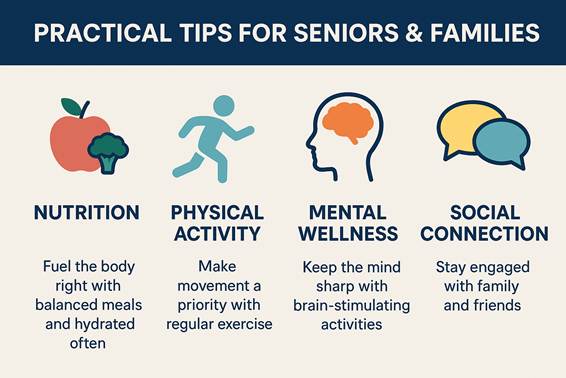
Effective care goes beyond managing medications; it’s about nurturing the mind and body.
Medication Management
With the average senior taking multiple prescriptions, errors are common. Our mySeniorCareHub includes vibrating medication reminders, ensuring your parent never misses a dose of heart or blood pressure medication.
Nutrition and Hydration
Dehydration is a frequent cause of hospitalizations in seniors.
- Hydration Tech: Smart water bottles can track intake and glow to remind your parent to drink.
- Meal Prep: Focus on nutrient-dense, lean proteins and whole grains. In 2026, many specialized meal delivery services now cater specifically to “Longevity Diets” (low-sodium, heart-healthy).
4. Embracing “AgeTech” in 2026
Just like our SafeLynk Smartwatch plays a vital role in caring for seniors, other technological options also provide additional benefits.
- Remote Patient Monitoring (RPM): Wearables now track blood pressure, glucose, and heart rate with medical-grade accuracy, sending data directly to primary care physicians.
- Voice Assistants: Tools like Amazon Alexa have become the “de facto” voice platform for seniors, used for everything from medication reminders to emergency “call for help” commands.
- Virtual Companionship: For seniors experiencing isolation, VR (Virtual Reality) experiences are now being used to “travel” or engage in social clubs from the comfort of their living room.
5. Emotional Well-being and Mental Health
Loneliness is as damaging to health as smoking 15 cigarettes a day.
- Intergenerational Connection: Encourage video calls or “grandparent-grandchild” gaming sessions.
- Cognitive Stimulation: Puzzles, reading, and even AI-driven cognitive games can help slow the progression of memory-related issues.
- Validation Therapy: When communicating, especially with those facing cognitive decline, focus on their feelings rather than correcting their facts. Empathy is your most powerful tool.
5. Caring for the Caregiver: Avoiding Burnout
You cannot pour from an empty cup. While caring for seniors can lead to caregiver burnout, which is a real medical risk.
- Respite Care: Utilize adult day centers or short-term stays at assisted living communities to give yourself a break.
- Support Groups: Connect with organizations like the Caregiver Action Network or the Family Caregiver Alliance for emotional support and resources.
- Financial Assistance: Check your state’s “Medicaid Waiver” programs. In many states, family caregivers can now receive a stipend for the care they provide.
Essential Resources for US Caregivers
| Resources | Best For | Website/Contact |
| Eldercare Locator | Local Services & Transportation | eldercare.acl.gov |
| Meals on Wheels | Nutritious Meal Delivery | mealsonwheelsamerica.org |
| Alzheimer’s Assoc. | Memory Care Support | alz.org |
| AARP Caregiving | Financial & Legal Guides | aarp.org/caregiving |
Final Thoughts
Caring for a senior is a journey of evolving needs. By combining the heart of traditional caregiving with the power of 2026 technology, you can ensure your loved ones live their golden years with the respect and comfort they deserve.
FAQ: A Caring Guide for Seniors
When is it time to consider a medical alert device like SafeLynk?
If your loved one has experienced a fall in the last year, takes more than three medications daily, or lives alone for more than 4 hours a day, it is time to invest in a wearable safety device such as SafeLynk Smartwatch or Locket.
Does my parent need a smartphone to use the SafeLynk Smartwatch?
No. Our SafeLynk devices are 4G-enabled, meaning they work independently of a smartphone. However, caregivers can use mySeniorCareHub app on their phones to monitor the data and location.
How do I convince a stubborn parent to accept help?
Frame the conversation around empowerment, not surveillance. Instead of saying, “I need to track you,” try: “I want you to be able to go on your morning walks with total confidence.
If something happens, this watch lets me know instantly, so you’re never alone.” Focus on how our SafeLynk watch preserves their independence by providing a “digital safety net.”
How do I know it’s “the right time” to start looking for extra help?
You don’t have to wait for a crisis like a broken hip to take action. In 2026, experts suggest looking for “The Three Ms”:
- Mobility: Are they struggling to get out of chairs or avoiding the stairs?
- Memory: Are they repeating the same questions within minutes or forgetting to pay bills?
- Medication: Are there unopened pill bottles or confusion about dosages? If you notice these signs, starting with a non-intrusive tool like the SafeLynk Smartwatch is an excellent first step before considering full-time home care.